Passata, Polpa or Peeled Tomatoes?

Which One Should You Choose for Italian Cooking?
If you’ve ever browsed the shelves of an Italian food store, you’ve probably noticed the wide variety of tomato products available. Passata, Polpa, Pelati, tomato paste—at first glance, it’s easy to get confused.
The truth is that each product has its own purpose in Italian cooking. Choosing the right tomato base doesn’t just affect the flavor of your dish—it also influences its texture and cooking time.
In this guide, we’ll explain the most popular Italian tomato products so you can always choose the perfect ingredient for your recipe.
Why Are There So Many Different Tomato Products?
One of the key principles of Italian cuisine is using the right ingredient for the right dish. The tomatoes used for a quick pasta sauce are not the same as those used in a slow-cooked ragù or a traditional Neapolitan pizza.
That’s why freshly harvested tomatoes are processed into different forms. This preserves the rich flavor and aroma of sun-ripened tomatoes all year round.
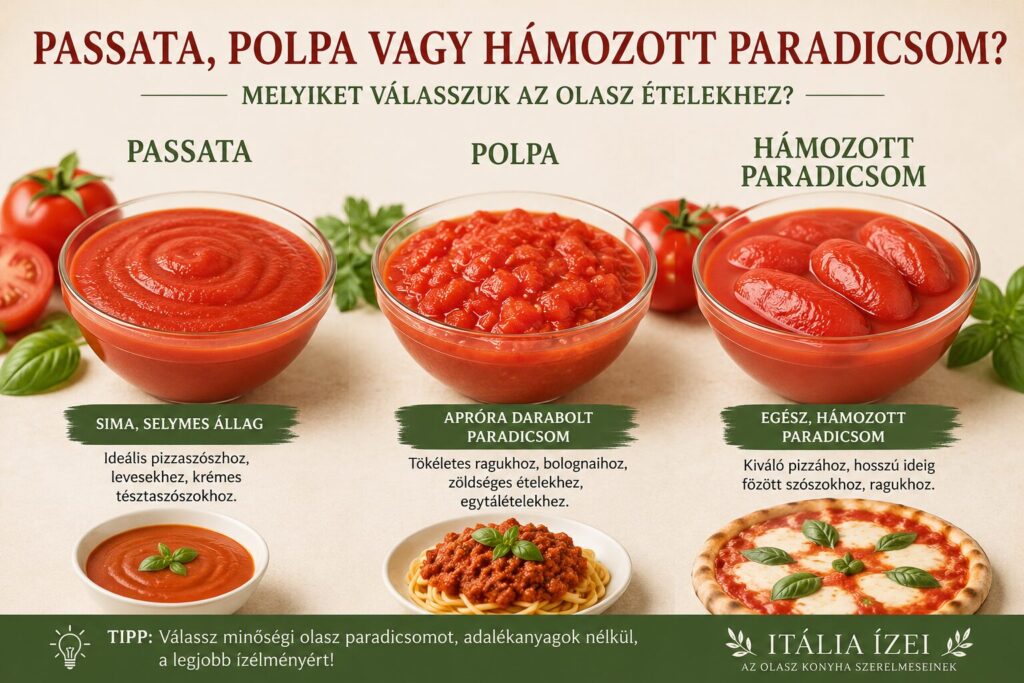
What Is Passata?
Passata is a smooth, strained tomato purée with a silky texture. Since the skins and seeds have been removed, it’s the ideal base for creamy tomato sauces.
Best used for:
- Tomato soup
- Quick pasta sauces
- Pizza sauce
- Lasagna
- Tomato meatballs
Because it already has a smooth consistency, Passata requires only a short cooking time.
What Is Polpa?
Polpa consists of finely chopped tomatoes packed in their own juice.
It provides a fresher, chunkier texture than Passata, making dishes feel more rustic and homemade.
Ideal for:
- Bolognese sauce
- Vegetable sauces
- Shakshuka
- Seafood pasta sauces
- Tomato-based stews
If you enjoy visible pieces of tomato in your dishes, Polpa is the perfect choice.
What Are Peeled Tomatoes (Pelati)?
Pelati are whole peeled tomatoes preserved in their own juice.
Many Italian chefs consider them the most versatile tomato product available.
Before cooking, simply crush them by hand or with a fork to achieve exactly the texture your recipe requires.
Best suited for:
- Neapolitan pizza sauce
- Slow-cooked ragù
- Tomato-based meat dishes
- Minestrone soup
- Homemade tomato sauce
What About Tomato Paste?
Tomato paste is highly concentrated tomato with most of its water removed.
It isn’t typically used as a sauce on its own but rather as a flavor enhancer.
Just one or two teaspoons can add a deeper, richer tomato flavor to your dishes.
Which One Should You Choose? – Quick Guide
| If you’re making… | Choose… |
|---|---|
| Pizza | Peeled Tomatoes or Passata |
| Quick tomato sauce | Passata |
| Bolognese ragù | Polpa |
| Lasagna | Passata |
| Slow-cooked ragù | Peeled Tomatoes |
| Tomato soup | Passata |
| Tomato stews | Polpa |
| Extra tomato flavor | Tomato Paste |
What Should You Look for When Buying?
High-quality Italian tomato products are easy to recognize if you know what to look for.
Choose products that:
- Are made in Italy.
- Have a short ingredient list.
- Contain no added sugar or artificial additives.
- Are made from ripe, sun-ripened tomatoes.
Premium producers often indicate the growing region or protected designation of origin (PDO/PGI) directly on the label.
Which Tomato Products Should You Always Have at Home?
If you only want to keep a few essentials in your pantry, these four products will cover almost every Italian recipe:
- Passata – for quick sauces and soups.
- Polpa – for hearty, chunky dishes.
- Peeled Tomatoes – for pizza and slow-cooked sauces.
- Tomato Paste – for adding rich tomato flavor.
With these four pantry staples, you’ll always have the perfect base for authentic Italian cooking.
Although Passata, Polpa, and Peeled Tomatoes all come from the same ingredient, each serves a different purpose in the kitchen. Understanding the differences makes it much easier to choose the right product for every recipe and brings you one step closer to authentic Italian flavors.
At Italia Ízei, you’ll find a carefully selected range of premium Italian tomato products, so you can prepare your next pizza, pasta, or ragù using authentic Italian ingredients.